jibinpc.com

Author name: jibinmarketer@gmail.com

Best Freelance Digital Marketer in Malappuram
Uncategorized

Best Freelance Digital Marketer in Malappuram

30 Days With AI Tools: What I Learned and What Actually Worked By Jibin PC | Digital Marketing Student & Aspiring Digital Marketer Artificial Intelligence is becoming a bigger part of the way we work, learn, and create. As a digital marketing student, I wanted to understand its practical value instead of simply reading about AI and its possibilities. So, I spent 30 days experimenting with different AI tools for writing, research, design, productivity, and digital marketing tasks. The biggest lesson I learned was simple: AI becomes more useful when it works alongside human creativity and decision-making. Why I Started Exploring AI Digital marketing includes many tasks that can require a lot of time, from planning content and researching topics to creating designs and organizing projects. I wanted to find out whether AI could make these tasks easier without affecting the quality or originality of my work. Using the right tools helped me reduce time spent on repetitive activities and gave me more space to focus on learning, creativity, strategy, and planning. AI Tools That Became Part of My Workflow ChatGPT became one of the tools I used most frequently during the 30-day experiment. I used it to brainstorm ideas, structure blog topics, improve writing, create social media concepts, and understand different digital marketing subjects. Useful for: One major advantage was that it helped me move from a basic idea to a clear starting point much faster. Creating marketing visuals became easier with Canva’s AI features. I experimented with it for social media creatives, presentations, promotional designs, and other visual content. Useful for: It allowed me to spend more time developing the concept and message instead of focusing only on repetitive design tasks. Good communication is essential in digital marketing. Grammarly helped me review my writing, identify language mistakes, and improve readability. I found it particularly useful when preparing professional content and checking drafts before publishing. Managing ideas and tasks became easier with Notion AI. I used it to organize notes, structure projects, summarize information, and plan different tasks. For someone learning several areas of digital marketing at the same time, having a clear and organized workflow can be extremely helpful. Research was another area where AI helped me save time. I used Perplexity AI to explore topics, find useful information, and discover sources for further research. However, one important lesson was that AI-generated answers should not be accepted without checking them. For important information, I always believe in reviewing reliable and trustworthy sources. What 30 Days of Experimentation Taught Me The biggest takeaway was that AI should support the work, not replace the thinking behind it. AI can help with brainstorming, research, organization, and repetitive tasks. But effective digital marketing still requires human judgment. A marketer needs to understand the audience, identify their needs, create the right message, communicate a brand effectively, and evaluate whether the information being shared is accurate. Technology can assist with the process, but meaningful decisions still require human input. Lessons I Learned While Using AI Use AI as a Starting Point I don’t treat AI-generated responses as the final version. I use them as a foundation and then develop the content with my own ideas and perspective. Always Check Important Information AI-generated information may sometimes contain errors or outdated details. Verifying important facts before using them is an essential habit. Let AI Save Time The biggest benefit for me was reducing repetitive work. This allowed me to dedicate more time to strategy, creativity, and learning. Choose Tools Based on the Task Not every AI platform is suitable for every job. Exploring different tools helped me understand which solutions work better for writing, research, design, and organization. AI’s Growing Role in Digital Marketing AI is changing many areas of digital marketing, including content development, customer communication, research, data analysis, and personalization. As these technologies continue to improve, marketers will need to learn how to use them effectively. I believe the strongest advantage will come from combining AI technology, creative thinking, marketing knowledge, and human understanding. Final Thoughts My 30-day AI experiment changed my perspective on how technology can support everyday work. AI helped me save time, organize ideas, explore topics, and improve different parts of my workflow. At the same time, it taught me that using AI effectively requires judgment, creativity, and responsibility. For me, AI isn’t about replacing original thinking. It’s about using technology to create more time for better thinking and creativity. As I continue my digital marketing journey, I look forward to exploring new AI tools and learning how they can be applied to create smarter and more effective marketing strategies. AI can help generate ideas, but human creativity gives those ideas meaning. About the Author Jibin PC is a Digital Marketing Student and Aspiring Digital Marketer with an interest in SEO, Social Media Marketing, Content Marketing, AI powered marketing, and Personal Branding. He enjoys exploring new digital tools, learning modern marketing strategies, and experimenting with technology to understand how it can create better and more effective digital experiences.

Uncategorized

GEO: Embracing the New Age of AI-Driven Search

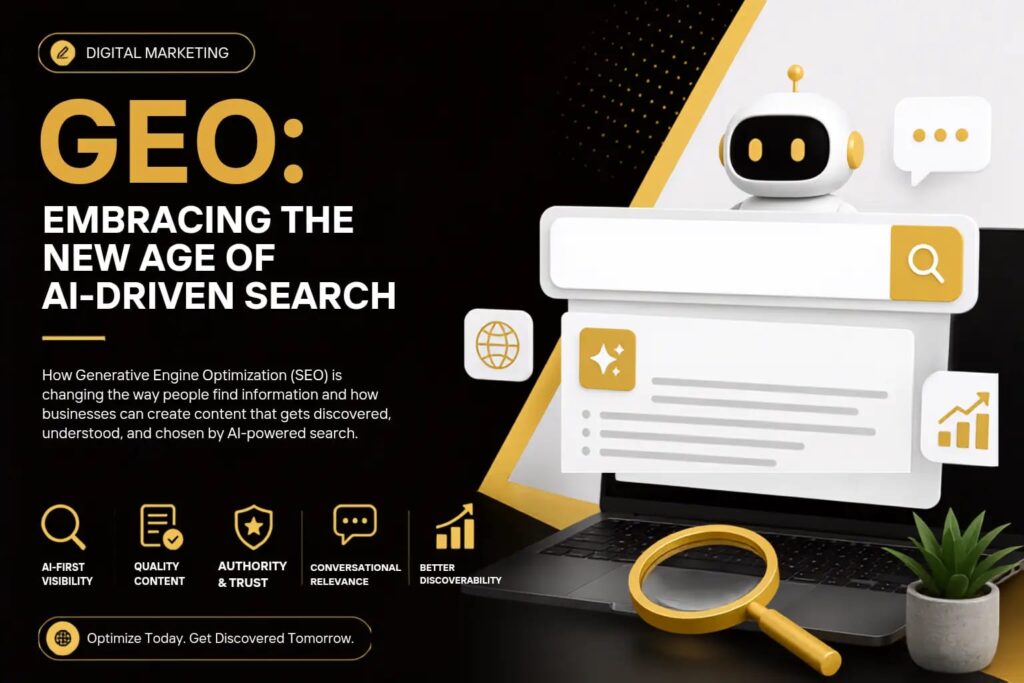
GEO: Embracing the New Age of AI-Driven Search The way people access information online is evolving.Searching for data is no longer just about entering keywords into search engines and scrolling through links.AI-driven platforms can now interpret questions, summarize findings, compare information from different sources, and deliver direct answers. This shift in search methods has given rise to a new approach in digital marketing called Generative Engine Optimization (GEO).For businesses and content creators, understanding GEO can help them prepare their online content for this changing search environment. What is GEO? Generative Engine Optimization is the process of developing content that is clear, beneficial, and credible enough for AI-based search systems to understand and use. While traditional SEO focuses on improving a website’s visibility in search engine results, GEO takes a broader view by considering how information might be interpreted and displayed in AI-generated responses. For instance, instead of visiting multiple websites to find out about digital marketing, a user might ask an AI platform: “What digital marketing techniques can help a small business grow?” The system could then gather data from different sources and present a concise summary.This means businesses need to create content that clearly demonstrates expertise and provides real value. Why is GEO Important? AI-powered search is changing how users interact with information.People can now ask detailed questions and get summarized responses without visiting multiple websites. For businesses, this creates a new type of online presence.A brand may end up being referenced in an AI-generated response even if the user never clicked on a traditional search result. A strong GEO-focused content strategy can help businesses achieve: GEO and SEO: What’s the Difference? SEO and GEO have similarities, but they have different focuses. SEO is mainly about increasing a website’s visibility and performance in traditional search engines. GEO is about making information clear, helpful, authoritative, and easy for generative AI systems to interpret and potentially include in their answers. This doesn’t mean SEO is becoming obsolete.Elements like website performance, useful content, relevant keywords, good structure, technical optimization, and credibility still matter. Rather than replacing SEO, GEO can be seen as an extra consideration in the changing search landscape. How to Prepare Your Content for GEO 1. Provide Real Value Create content that helps people, not just fill pages with keywords.Answer real questions, explain concepts clearly, and offer practical information that your audience can apply. Using original examples, relevant explanations, and useful data can increase the value of your content. 2. Answer Actual Questions User behavior is becoming more conversational.People now use natural, detailed questions instead of just short search terms. For example: Traditional search: “SEO benefits” Conversational search: “How can SEO help small businesses connect with a wider audience?” Creating content that answers real questions makes your website more useful to both users and modern search systems. 3. Demonstrate Your Expertise Trust is crucial in digital content.Show your knowledge through practical examples, case studies, original observations, research, and clear author information. Content that relies only on commonly repeated information might offer less value than material that includes genuine experience and unique insights. 4. Make Your Content Easy to Understand A clear structure benefits both readers and AI systems. Use descriptive headings, short paragraphs, bullet points, definitions, FAQs, and logically organized information.Avoid unnecessary complexity and make key points easy to find. 5. Build Your Online Authority GEO isn’t just about individual blog posts.Your overall digital presence contributes to how your brand is seen online. Ensure business information is consistent across your website, social profiles, business listings, publications, and other relevant platforms.A consistent digital identity can help build credibility. 6. Offer Unique Information Originality makes your content more valuable. Consider including: The more useful and different your information is, the more value it can provide to readers. How GEO and SEO Can Work Together GEO should not replace traditional SEO.Both can work together as part of a modern digital marketing approach. SEO helps your website be found through conventional search, while GEO encourages you to structure your content for AI-generated answers. A solid strategy may include technical SEO, helpful content, clear website organization, relevant topics, authoritative information, and content that answers real user questions. What Could the Future of Search Look Like? AI continues to influence how people find information, businesses, products, and services.As these technologies develop, the definition of online visibility may keep expanding. Instead of focusing only on: “How can I get higher rankings in search results?” Businesses may also need to consider: “How can I build my brand’s credibility as people use AI to find information about my industry?” GEO is still in development, and there’s no guaranteed way to appear in AI-generated responses.Creating reliable, valuable, and original content remains key to keeping up with the evolving search environment. Conclusion Generative Engine Optimization presents a new opportunity in the world of digital marketing.As AI-driven searches become more common, businesses need to go beyond traditional rankings and focus on the overall quality and usefulness of their online information. By combining strong SEO basics with clear communication, original insights, credible information, and content that meets user needs, businesses can build a stronger foundation for the future of search. The future of search is becoming more conversational, and the brands that provide the most helpful answers will have the best chance of staying visible.

RESOURCES

Turn Typography References Into Custom AI Prompts

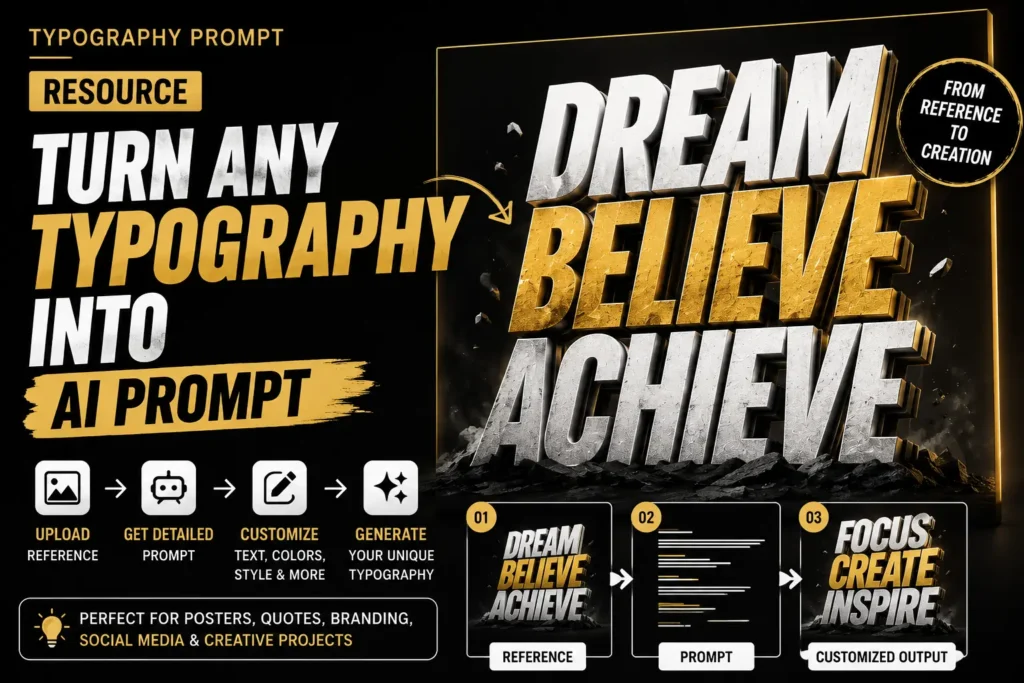
Turn Typography References Into Custom AI Prompts Found a typography design on Pinterest that you love? Instead of starting from scratch, use this simple workflow to understand the visual style, generate a detailed AI prompt, and customize it with your own text and creative direction. How It Works 01 — Find a Reference Choose a typography design that matches the style you’re looking for. 02 — Upload the Image Upload the reference image to ChatGPT and ask it to analyze the design. 03 — Generate the Prompt Use the prompt below to get a detailed description of the typography, composition, lighting, colors, textures, effects, and overall visual style. 04 — Customize It Copy the generated prompt into a new AI image-generation chat. Replace the original text with your own words and modify the colors, effects, background, or other elements. 05 — Generate Your Design Create your own typography artwork while using the reference as visual inspiration. Copy This Prompt Prompt: Analyze this typography reference image and create a detailed AI image-generation prompt based on its visual characteristics. Describe the typography style, letterform characteristics, composition, layout, font weight, spacing, perspective, 3D effects, textures, lighting, shadows, reflections, color palette, background, depth, atmosphere, and overall art direction. Focus on describing the visual design rather than identifying the original creator, brand, or exact font. Make the final prompt clear, detailed, and easy to copy into an AI image generator. Do not reproduce logos, trademarks, or personal identities from the reference. At the end, provide a separate section called CUSTOMIZABLE ELEMENTS showing which parts of the prompt I can change, such as the main text, colors, background, materials, lighting, and effects. Customize Your Prompt After getting the generated prompt, you can modify: TEXT: Replace the original typography with your own word or phrase. COLORS: Change the color palette to match your brand. MATERIAL: Try chrome, glass, plastic, metal, liquid, stone, fabric, paper, or other textures. LIGHTING: Experiment with neon, studio, cinematic, soft, dramatic, or rim lighting. BACKGROUND: Replace the original background with a solid color, gradient, environment, or abstract scene. EFFECTS: Add glow, reflection, particles, smoke, distortion, shadows, extrusion, or motion effects. Quick Workflow Reference Image↓Upload to ChatGPT↓Generate Detailed Prompt↓Copy Prompt↓Replace Text & Customize↓Generate Your Typography Pro Tip Don’t ask AI to simply “copy this design.” Instead, ask it to analyze the design principles behind the reference typography, composition, lighting, materials, colors, depth, and effects. This gives you more control and makes it easier to create a new design based on the visual direction you like. Create. Customize. Make It Yours.

Best Freelance Digital Marketer in Malappuram
Uncategorized

AI Is Changing Digital Marketing – But Human Creativity Still Wins

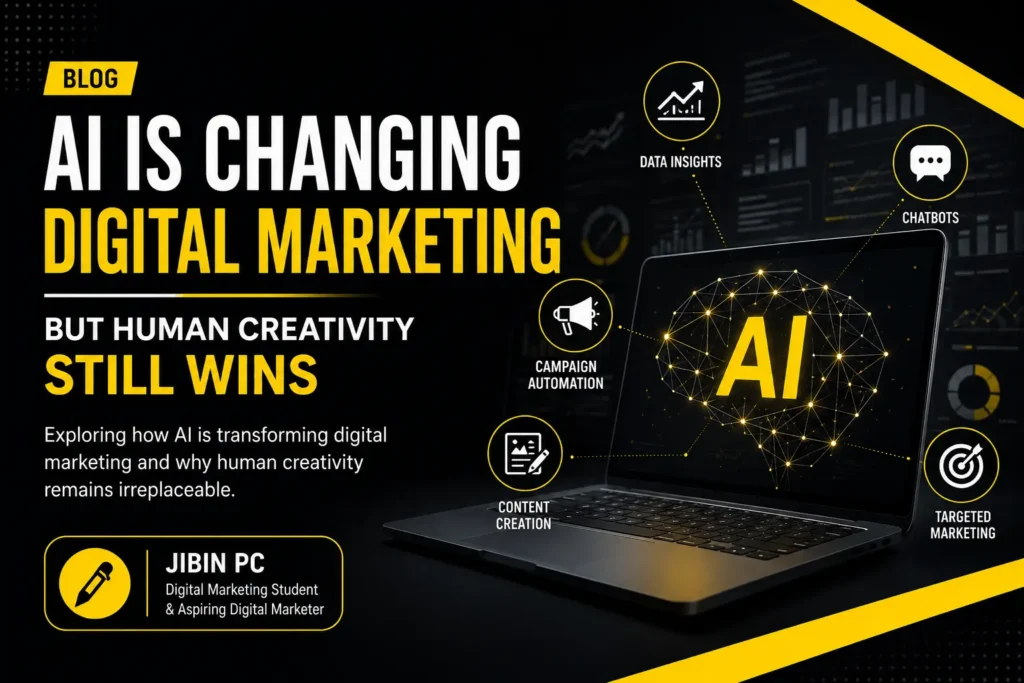
AI Is Changing Digital Marketing – But Human Creativity Still Wins Author: Jibin PCDigital Marketing Student | Aspiring Digital Marketer Introduction Digital marketing is evolving faster than ever. Artificial Intelligence (AI) has transformed how brands create content, analyze customer behavior, and optimize campaigns. From AI-powered chatbots to personalized recommendations, businesses are embracing automation to improve efficiency. However, despite these advancements, one thing remains irreplaceable human creativity. How AI Is Transforming Digital Marketing AI is no longer a futuristic concept. It has become an everyday tool for marketers. Today, AI helps businesses: These capabilities save time and improve productivity, allowing marketers to focus on strategy rather than repetitive tasks. The Human Advantage Although AI is powerful, it cannot fully understand emotions, cultural context, or authentic storytelling. Customers connect with brands because of: These are areas where human marketers continue to make the biggest impact. The Future Belongs to AI + Human Creativity Successful marketers will not compete with AI they will collaborate with it. The future belongs to professionals who can combine: This combination creates better customer experiences and stronger business growth. Skills Every Digital Marketer Should Learn in 2026 To stay competitive, marketers should focus on: Learning these skills today will prepare marketers for tomorrow’s opportunities. Final Thoughts Artificial Intelligence is changing the way marketing works, but it is not replacing marketers. Instead, it is empowering them to work smarter and create greater value. The marketers who continue learning, adapting, and combining technology with creativity will lead the future of digital marketing. About the Author I’m Jibin PC, a Digital Marketing Student passionate about SEO, content marketing, branding, and AI-powered marketing strategies. My goal is to help businesses grow through smart, data-driven, and creative digital marketing solutions.

Uncategorized

The Importance of Digital Marketing for Modern Business Growth​

Digital marketing has become a key driver of business growth in today’s competitive landscape. It helps businesses reach a wider audience, connect with the right customers, and achieve measurable results. 1. Expanded Reach Businesses can connect with potential customers beyond their local market through online channels. 2. Cost-Effective Promotion Digital marketing offers affordable solutions that help businesses maximize their marketing budget. 3. Targeted Audience Engagement Advanced targeting tools allow businesses to reach people who are most likely to be interested in their products or services. 4. Performance Tracking Analytics provide valuable insights into campaign performance, helping businesses make informed decisions. 5. Stronger Brand Presence Consistent online engagement helps build credibility, trust, and long-term customer relationships. Conclusion Digital marketing enables businesses to grow efficiently, increase visibility, and stay competitive in an increasingly digital world. Author: Jibin PC Digital Marketing Student & Aspiring Digital Marketer

Scroll to Top