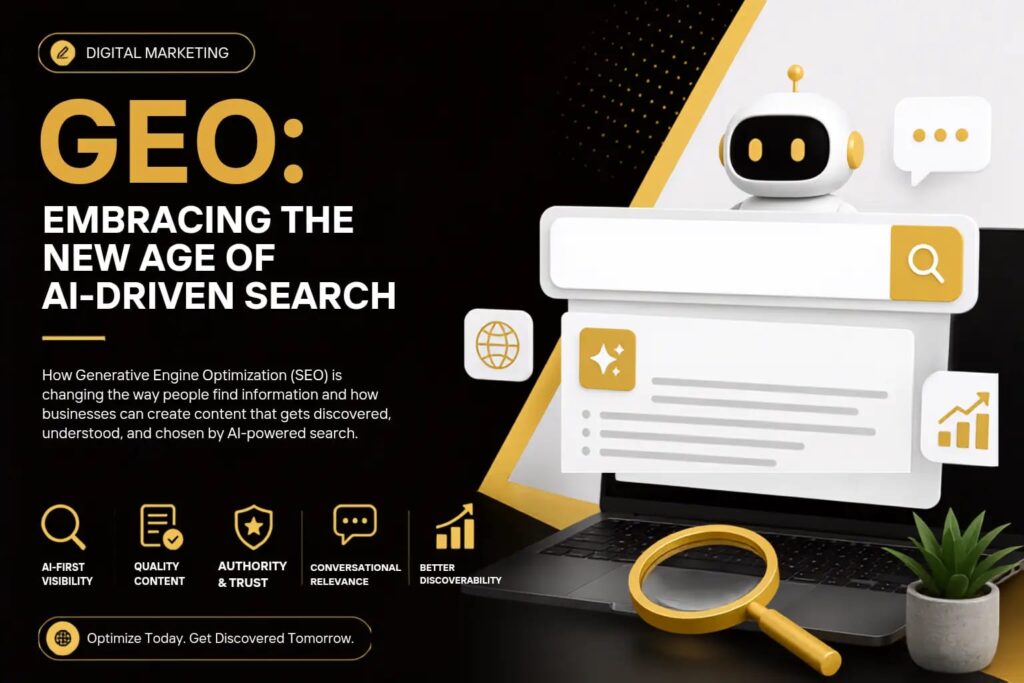
GEO: Embracing the New Age of AI-Driven Search
The way people access information online is evolving.
Searching for data is no longer just about entering keywords into search engines and scrolling through links.AI-driven platforms can now interpret questions, summarize findings, compare information from different sources, and deliver direct answers.
This shift in search methods has given rise to a new approach in digital marketing called Generative Engine Optimization (GEO).
For businesses and content creators, understanding GEO can help them prepare their online content for this changing search environment.
What is GEO?
Generative Engine Optimization is the process of developing content that is clear, beneficial, and credible enough for AI-based search systems to understand and use.
While traditional SEO focuses on improving a website’s visibility in search engine results, GEO takes a broader view by considering how information might be interpreted and displayed in AI-generated responses.
For instance, instead of visiting multiple websites to find out about digital marketing, a user might ask an AI platform:
“What digital marketing techniques can help a small business grow?”
The system could then gather data from different sources and present a concise summary.
This means businesses need to create content that clearly demonstrates expertise and provides real value.
Why is GEO Important?
AI-powered search is changing how users interact with information.
People can now ask detailed questions and get summarized responses without visiting multiple websites.
For businesses, this creates a new type of online presence.
A brand may end up being referenced in an AI-generated response even if the user never clicked on a traditional search result.
A strong GEO-focused content strategy can help businesses achieve:
- Higher visibility in AI-based search environments
- Stronger brand reputation
- Greater online influence
- Better discoverability through natural, conversational queries
- More informative and reliable content
GEO and SEO: What’s the Difference?
SEO and GEO have similarities, but they have different focuses.
SEO is mainly about increasing a website’s visibility and performance in traditional search engines.
GEO is about making information clear, helpful, authoritative, and easy for generative AI systems to interpret and potentially include in their answers.
This doesn’t mean SEO is becoming obsolete.
Elements like website performance, useful content, relevant keywords, good structure, technical optimization, and credibility still matter.
Rather than replacing SEO, GEO can be seen as an extra consideration in the changing search landscape.
How to Prepare Your Content for GEO
1. Provide Real Value
Create content that helps people, not just fill pages with keywords.
Answer real questions, explain concepts clearly, and offer practical information that your audience can apply.
Using original examples, relevant explanations, and useful data can increase the value of your content.
2. Answer Actual Questions
User behavior is becoming more conversational.
People now use natural, detailed questions instead of just short search terms.
For example:
Traditional search: “SEO benefits”
Conversational search: “How can SEO help small businesses connect with a wider audience?”
Creating content that answers real questions makes your website more useful to both users and modern search systems.
3. Demonstrate Your Expertise
Trust is crucial in digital content.
Show your knowledge through practical examples, case studies, original observations, research, and clear author information.
Content that relies only on commonly repeated information might offer less value than material that includes genuine experience and unique insights.
4. Make Your Content Easy to Understand
A clear structure benefits both readers and AI systems.
Use descriptive headings, short paragraphs, bullet points, definitions, FAQs, and logically organized information.
Avoid unnecessary complexity and make key points easy to find.
5. Build Your Online Authority
GEO isn’t just about individual blog posts.
Your overall digital presence contributes to how your brand is seen online.
Ensure business information is consistent across your website, social profiles, business listings, publications, and other relevant platforms.
A consistent digital identity can help build credibility.
6. Offer Unique Information
Originality makes your content more valuable.
Consider including:
- Personal experiences
- Original observations
- Case studies
- Customer insights
- Research findings
- Practical experiments
- Unique examples
- Professional opinions
The more useful and different your information is, the more value it can provide to readers.
How GEO and SEO Can Work Together
GEO should not replace traditional SEO.
Both can work together as part of a modern digital marketing approach.
SEO helps your website be found through conventional search, while GEO encourages you to structure your content for AI-generated answers.
A solid strategy may include technical SEO, helpful content, clear website organization, relevant topics, authoritative information, and content that answers real user questions.
What Could the Future of Search Look Like?
AI continues to influence how people find information, businesses, products, and services.
As these technologies develop, the definition of online visibility may keep expanding.
Instead of focusing only on:
“How can I get higher rankings in search results?”
Businesses may also need to consider:
“How can I build my brand’s credibility as people use AI to find information about my industry?”
GEO is still in development, and there’s no guaranteed way to appear in AI-generated responses.
Creating reliable, valuable, and original content remains key to keeping up with the evolving search environment.
Conclusion
Generative Engine Optimization presents a new opportunity in the world of digital marketing.
As AI-driven searches become more common, businesses need to go beyond traditional rankings and focus on the overall quality and usefulness of their online information.
By combining strong SEO basics with clear communication, original insights, credible information, and content that meets user needs, businesses can build a stronger foundation for the future of search.
The future of search is becoming more conversational, and the brands that provide the most helpful answers will have the best chance of staying visible.